
Work Through Your Rough Spots — Where Real Change Is Forged
Growth doesn’t break down when things get hard—it begins there. This reflection explores why resistance, fear, and discouragement show up right when change matters most, and how learning to stay present through rough patches unlocks courage, self-trust, and lasting transformation.
Derek Innes
1/21/20262 min read
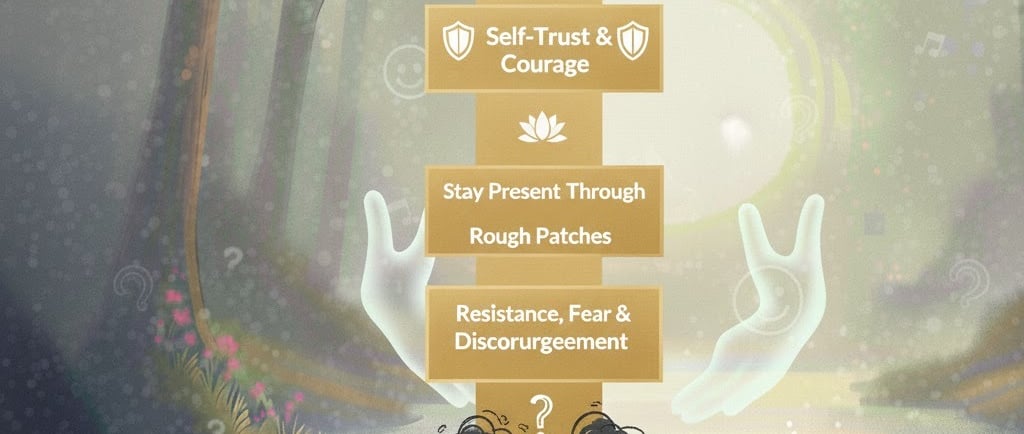
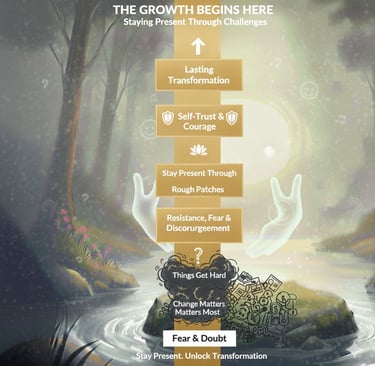
When people begin to seriously shift their lives, there’s usually a moment of commitment. They decide to do something slightly uncomfortable something that stretches them beyond habit but points toward the life they actually want.
It might look simple on the surface: a morning writing practice, daily movement, meditation, or finally facing their finances with honesty and consistency.
At first, there’s momentum. Hope. A sense of “this time is different.”
And for a while, that’s true.
Then the rough spots arrive.
Resistance shows up quietly. The habit starts getting postponed. Energy drops. Self-talk turns sharp. Discouragement creeps in. Fear is there too, though most people don’t recognize it as fear they just feel heavy, avoidant, or overwhelmed.
This is usually the point where people quit.
But this moment this exact point of friction is where the real work lives.
When resistance, fear, overwhelm, or self-blame appear, the instinct is to escape. To bail. To label the experience as failure and retreat to what’s familiar. These moments aren’t pleasant or motivating. They don’t feel inspiring.
And yet, they are rich with possibility.
Because quitting isn’t the only option.
In these rough spots, something else becomes available if you’re willing to stay. You might discover courage that isn’t dependent on feeling confident. You might access a deeper, steadier strength that doesn’t vanish when motivation does. You might feel a profound connection to every other human who has struggled to change and felt alone in it.
You might even find compassion for yourself where you once used pressure or shame.
Darkness isn’t a mistake in the process it’s part of it. It’s not something to rush past or avoid. Within it are lessons, power, gratitude, and an honest kind of love. The rough spots expose where growth is actually needed, not where you’ve failed.
So the invitation is simple, but not easy:
Don’t give up when things get hard.
Get support. Change how you meet the moment. Try something new instead of disappearing.
Try curiosity instead of judgment.
Try slowing your breath.
Try sitting with the discomfort rather than fixing it.
Try remembering your strength instead of questioning your worth.
Try hope.
Try self-trust.
Try kindness toward yourself.
Work through the rough spot not around it, not away from it.
Because once you learn how to stay present in these moments, your capacity expands. And the question becomes powerful:
What would become possible in your life if rough patches no longer stopped you—but shaped you instead?