
Unlocking Your Potential: The Power of Belief
Most of what holds us back isn’t effort or discipline—it’s belief. This post introduces the practice of examining your beliefs, showing how to identify the thoughts shaping your actions, question their truth, and gently let go of what no longer serves you.
Derek Innes
1/28/20264 min read
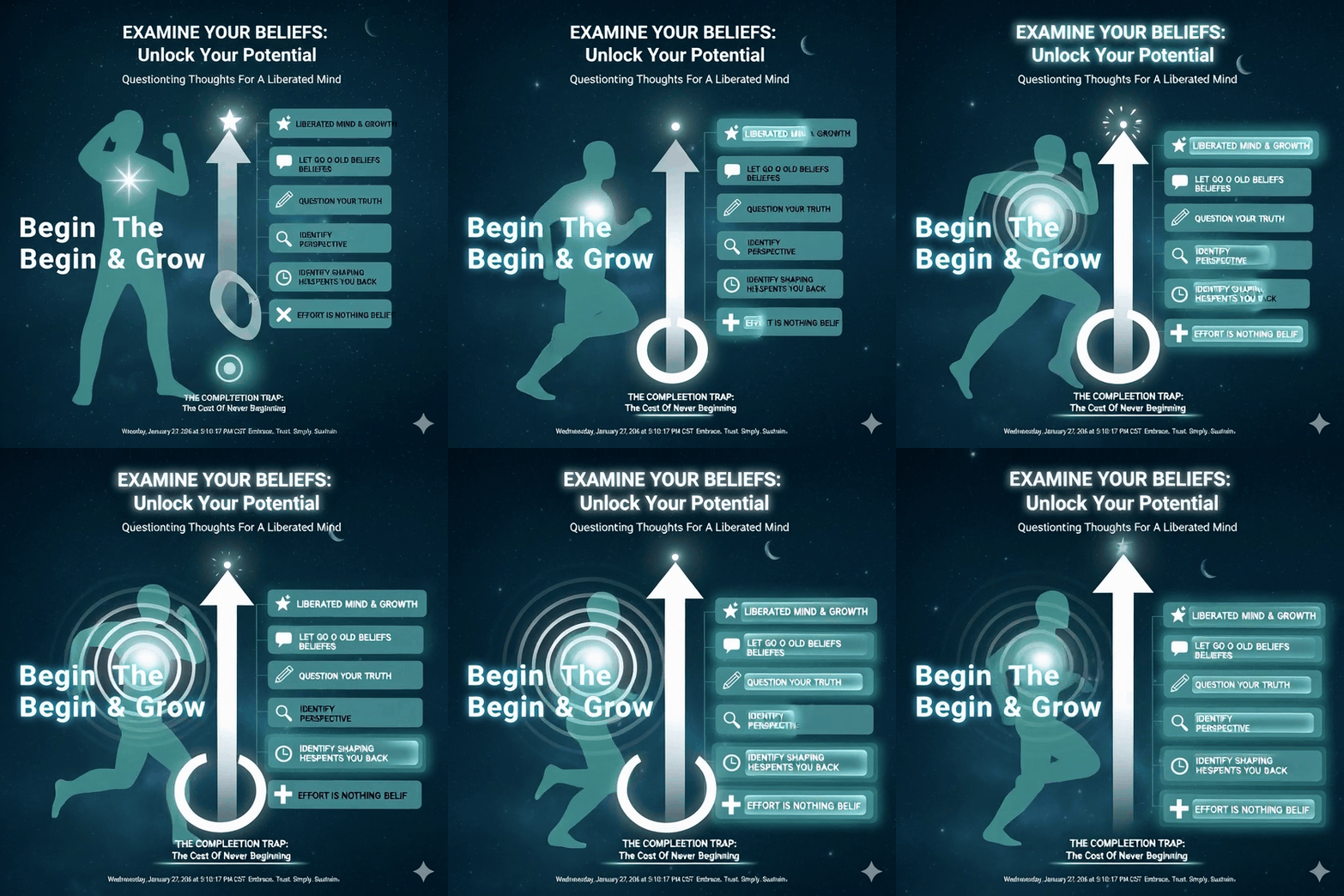
Understanding Belief: The Foundation of Our Actions
Belief is a fundamental aspect of human psychology that significantly influences our actions and decisions. It serves as the foundation upon which we build our thoughts, perceptions, and interpretations of the world around us. Our belief systems are complex constructs shaped by various factors, including past experiences, cultural background, upbringing, and societal norms. Each of these elements plays a vital role in how we perceive ourselves and the potential we believe we possess.
From a psychological perspective, belief can be defined as an acceptance that something exists or is true, particularly without proof. Cognitive theories suggest that our beliefs are often formed early in life, largely influenced by the environment we grow up in. For example, children who are consistently encouraged to strive for success may develop a belief in their abilities, leading them to pursue goals with confidence and resilience. Conversely, sustained criticism or lack of support can foster beliefs rooted in self-doubt, adversely affecting one's actions in the future.
Understanding the nuances of our beliefs is crucial for personal growth. Often, these beliefs operate subconsciously, ultimately guiding our behaviors and decisions without our conscious awareness. They can act as self-fulfilling prophecies, driving us toward success or failure based on what we intrinsically hold to be true. Thus, it is imperative to reflect on and analyze our belief systems, particularly if we find ourselves confronting barriers in achieving personal or professional goals. By identifying and reassessing limiting beliefs and replacing them with empowering alternatives, we can unlock our hidden potential and enhance our overall well-being.
Identifying Limiting Beliefs: The First Step to Change
Limiting beliefs can significantly inhibit one’s personal growth and hinder the realization of potential. These negative perceptions about oneself often stem from past experiences and societal conditioning. Therefore, identifying these beliefs is paramount for initiating meaningful change. One effective strategy for uncovering limiting beliefs is through self-reflection techniques such as journaling and meditation.
Journaling serves as a powerful tool for introspection. By regularly documenting thoughts and feelings, individuals can begin to identify patterns that reveal underlying beliefs. For example, someone who consistently writes about feeling inadequate in social situations may recognize a limiting belief about their social skills. This realization can prompt further exploration into the origins of such a belief, whether it stems from childhood experiences or specific incidents in adulthood.
Meditation is another invaluable practice for uncovering limiting beliefs. By quieting the mind and focusing on the present moment, individuals can create a space for self-discovery. Guided visualizations can help in pinpointing the beliefs that contribute to self-doubt and anxiety. During these sessions, practitioners may encounter thoughts that have been stifled, granting them the opportunity to re-evaluate and challenge those views.
It is critical to differentiate between objective truths and subjective beliefs during this process. Often, limiting beliefs are colored by personal perceptions rather than factual realities; for instance, a person may convince themselves they are not capable of public speaking based on a singular negative experience. By acknowledging such beliefs as subjective, individuals can begin to dismantle the barriers that prevent them from achieving their goals.
Ultimately, recognizing limiting beliefs through thoughtful self-reflection can pave the way for a transformative journey towards embracing one's full potential.
Challenging Your Beliefs: Questioning Their Validity
Beliefs play a crucial role in shaping our perceptions and behaviors. However, not all beliefs are constructive or beneficial, leading to limitations that may hinder personal growth. To foster empowerment and transformation, it is crucial to engage in a process of questioning the validity of one's beliefs. This can be achieved through cognitive restructuring and the Socratic method, two effective techniques that encourage critical examination.
Cognitive restructuring involves identifying irrational or distorted thoughts and replacing them with more rational perspectives. This method allows individuals to recognize the origins of their beliefs and the evidence supporting or contradicting them. To implement cognitive restructuring, start by listing beliefs that seem unchallenged. For each belief, ask questions such as: What evidence supports this belief? Is this belief based on fact or assumption? Are there instances where this belief doesn't hold true? Through this reflective process, one can begin to see the flaws or incomplete nature of certain beliefs.
The Socratic method complements cognitive restructuring by promoting dialogical questioning, allowing individuals to explore the depth of their beliefs in a conversational manner. During this process, asking open-ended questions can facilitate insights. Questions like: Why do I hold this belief? How does it serve me? What would happen if I no longer believed this? serve to unearth underlying assumptions and facilitate deeper understanding. The dialogue can be conducted with a trusted friend, mentor, or even in a journal, making the exploration of belief systems more accessible.
By challenging beliefs and questioning their validity, individuals can confront their fears and doubts. This exploration may lead to profound insights that can reformulate belief systems, offering a pathway to personal growth. As one begins to understand that beliefs can change and evolve, the potential for unlocking one's true potential increases significantly.
Letting Go of Unhelpful Beliefs: Making Space for Growth
Personal growth begins with the recognition that some beliefs may hinder our progress, making it essential to let go of those that no longer serve us. This process requires introspection and a willingness to challenge long-held notions that may not align with our current aspirations or realities. By initiating this critical phase of development, individuals can create a fertile environment for growth and transformation.
One effective strategy for releasing unhelpful beliefs is the practice of identifying and acknowledging them. Keeping a journal can be particularly beneficial for this, allowing for reflection on thoughts and feelings associated with certain beliefs. Through this self-examination, individuals can discern which beliefs are damaging and which ones are empowering.
Following identification, it's crucial to replace negative beliefs with positive affirmations. By adopting affirmations that resonate with personal goals, individuals help shift their mindset towards a more constructive outlook. For instance, replacing "I am not good enough" with "I am capable and deserving of success" can significantly alter one’s self-perception. It is vital to repeat these affirmations regularly to reinforce this new belief system.
Cultivating a mindset open to change also involves embracing patience and self-compassion. The journey of letting go is not always linear, and setbacks are a natural part of personal development. Individuals should remind themselves that growth takes time and that it is acceptable to take steps backward before moving forward. This gentle approach fosters resilience and encourages continued progress.
Ultimately, letting go of unhelpful beliefs is a vital component of unlocking one’s potential. By committing to this transformative journey, individuals can cultivate a positive mindset that not only supports personal aspirations but also enriches their overall quality of life. As one continues along this path, remember to celebrate small victories and maintain hope, for every step taken is a step closer to personal empowerment.