
Understanding Impulse Shopping: Breaking the Cycle of Stress Responses
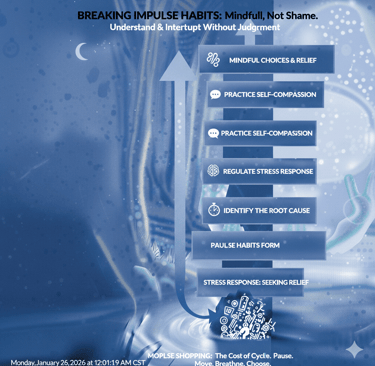
Impulse shopping is rarely about the item itself. It is a stress response looking for relief. This post breaks down why impulse habits form and offers practical, humane strategies to interrupt them without shame, willpower battles, or self-judgment.
Derek Innes
1/26/20261 min read
What Triggers Impulse Shopping?
Impulse shopping is often triggered by a variety of stressors that we encounter in our daily lives. When faced with emotional challenges, individuals may seek temporary relief from discomfort through shopping. This behavior is less about the item acquired and more about the emotional release it provides. In some cases, shopping becomes an outlet for stress relief, filling a void created by anxiety, sadness, or frustration.
The Psychology Behind Impulse Buying
Understanding the psychological mechanisms behind impulse buying is crucial in addressing these habits. The thrill of acquiring something new can lead to a temporary boost in mood, often referred to as retail therapy. Unfortunately, this cycle can create a dependency, where individuals may turn to shopping as a primary means of coping with life’s pressures. The challenge is not only recognizing the behavior but understanding that it is a normal response to stress.
Practical Strategies to Curb Impulse Shopping
Interrupting impulse shopping behaviors does not require shame or self-judgment; rather, it calls for positive interventions. Here are a few strategies that can help:
- Reflect Before Making a Purchase: Take a moment to evaluate your emotional state prior to buying. Ask yourself if this purchase is stemming from a need for relief.
- Establish a Waiting Period: Implement a rule that requires a minimum waiting period (e.g., 24 hours) before finalizing a purchase. This pause can help you assess whether the desire to buy is genuine.
- Identify Alternative Coping Mechanisms: Instead of shopping, focus on healthier ways to manage stress. This may involve exercise, meditation, or engaging in a hobby.
- Limit Exposure to Temptation: Avoid situations that lead to impulse shopping, such as browsing online stores or visiting malls during times of stress.
By incorporating these strategies into your routine, you can begin to develop a healthier relationship with shopping and address underlying emotional needs in more constructive ways. Remember, the goal is not to eliminate shopping altogether but to bring mindfulness into your purchasing habits. This approach fosters a more compassionate understanding of your impulses, ultimately leading to an improved emotional well-being.