
Stay Informed Without Letting the World Overwhelm You
Constant news and social media exposure can quietly fuel anxiety. This post offers practical ways to stay informed while protecting your mental and emotional stability.
Derek Innes
1/20/20262 min read
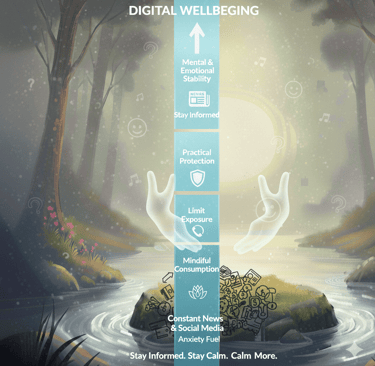
Many people are carrying a low-grade anxiety these days. The world feels loud, unstable, and constantly demanding our attention. News alerts, social media feeds, and endless commentary pull us into a cycle of worry and emotional overload.
At the same time, completely checking out isn’t realistic—or responsible. We want to stay informed. We just don’t want to drown in it.
The challenge, then, is learning how to stay aware without letting anxiety take over.
There’s no perfect formula, but there are ways to create space between information and overwhelm.
Limit your intake
More information does not equal better understanding. In fact, constant exposure often does the opposite. Choose a small number of trustworthy, non-sensational sources. Check them intentionally—once or twice a day, for a short, defined window. When the time is up, step away. This keeps you informed without letting the news dominate your nervous system.
Wait before reacting
Modern platforms reward instant reaction, but your mental health pays the price. When something upsetting appears, resist the urge to comment, share, or argue right away. Give yourself a day. Let the emotional charge settle. Clarity almost always improves with time, and anxiety tends to lose its grip when you don’t feed it immediately.
Focus on what you can control
Much of our distress comes from mentally taking responsibility for problems we cannot personally fix. Instead, ask grounded questions: Is there a local action I can take? A conversation I can have? A meaningful contribution I can make? If not, release the illusion that you must carry the weight of the world. Direct your energy toward what is actually within your reach.
Notice your internal response
Anxiety often escalates because we fight it or judge it. Practice noticing when fear, frustration, or overwhelm shows up. Where does it live in your body? Tight chest, clenched jaw, shallow breathing? Simply noticing sensations—without commentary—can reduce their intensity. Let the feeling be there without turning it into a story.
Breathe and regulate
Your nervous system needs signals of safety. Slow, deep breathing can calm it quickly. A short walk, sitting quietly, or pausing for stillness can reset your baseline. These aren’t escapes—they’re forms of regulation that allow you to stay engaged without burning out.
None of this fixes the world’s problems. But it does help you stay steady enough to live, think clearly, and act when action is actually possible.
Stay informed. Stay grounded. And remember: caring about the world doesn’t require sacrificing your mental health.