
Simplifying Decision-Making: How to Choose Without Getting Stuck
A calm, practical approach to breaking free from indecision by addressing fear, restoring clarity, and trusting your inner signal.
Derek Innes
1/21/20262 min read
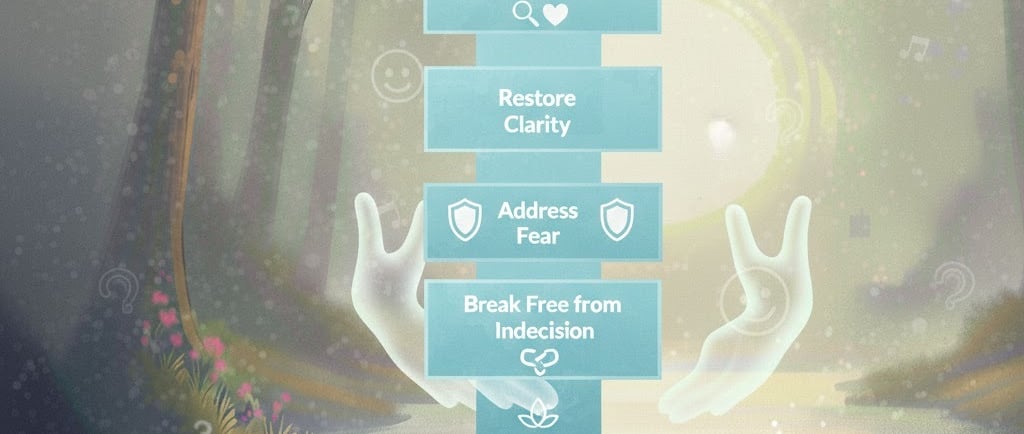
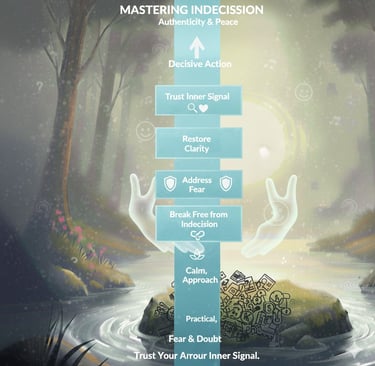
Indecision is one of the quiet drains on our energy. We circle the same choices again and again, weighing pros and cons, seeking more information, and still feeling unable to move forward. The longer this goes on, the heavier it feels.
At the surface, indecision looks like a thinking problem. In reality, it’s usually an emotional one.
When we’re stuck, we’re often afraid afraid of choosing wrong, afraid of regret, afraid of how a decision might reflect on us. In some cases, the stakes are genuinely high: financial risk, career consequences, or major life changes. But more often, the fear is internal. We’re worried about self-judgment, embarrassment, or losing a sense of control.
The first step toward simpler decision making isn’t better analysis. It’s creating enough emotional space to choose.
Step 1: Name and Soothe the Fear
Before clarity can emerge, fear needs to settle.
Notice what’s actually happening in your body and mind. Are you tense? Anxious? Restless? Label the feeling without judging it. Indecision feeds on unacknowledged fear.
Then, soothe it. Take a few slow breaths. Go for a short walk. Write down what you’re afraid of. Talk it through with someone you trust. The goal isn’t to eliminate fear, but to lower it enough that it’s no longer driving the decision.
When fear softens, options stop feeling so overwhelming.
Step 2: Create Quiet and Ask a Better Question
Once you’re calmer, step away from noise and input. Find a quiet space ideally somewhere natural and sit still for a few minutes. Let your thoughts settle.
Then ask a different kind of question.
Instead of “What’s the safest choice?” or “What will make everyone happy?” ask:
“What am I feeling called to do?”
This question bypasses overthinking and invites a deeper signal. An answer may not arrive as a fully formed plan t might come as a pull, a sense of alignment, or a quiet knowing.
That’s enough.
Step 3: Trust the Answer That Comes
When something arises from that deeper place, trust it.
Trust doesn’t mean the choice will be perfect. It means you’re willing to stand behind your decision and deal with whatever follows. That’s where real confidence is built—not in being right every time, but in knowing you can handle the outcome.
This kind of trust is a skill, and like any skill, it improves with practice.
Start small. Practice on low-stakes decisions:
What to focus on today
Which task to do next
When to rest and when to push
Each time you listen inwardly and act, decision-making becomes lighter.
Simplicity Through Self-Trust
Complex decisions don’t require complex systems. They require emotional steadiness and self-trust.
When fear is acknowledged, space is created, and your inner signal is respected, choosing becomes far simpler. Not because life gets easier—but because you stop fighting yourself.
And that changes everything.