
Rethinking Discipline: Embracing Play and Curiosity Over Pressure and Burnout
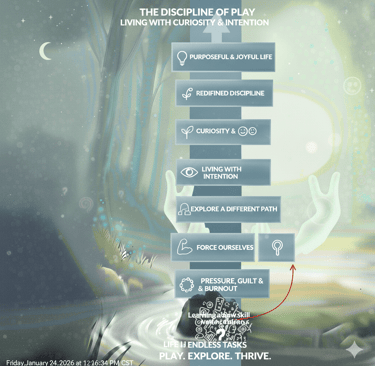
We’re taught that discipline means forcing ourselves through endless tasks. This post challenges that belief and explores a different path: living with play, curiosity, and intention instead of pressure, guilt, and burnout.
Derek Innes
1/24/20264 min read
The Traditional View of Discipline
The conventional understanding of discipline is often characterized by a framework of self-imposed restrictions, rigorous adherence to routines, and an unyielding pursuit of goals. This perspective positions discipline as a necessary component of success, where individuals believe that sacrificing enjoyment and leisure is imperative for achieving results. As a result, many people associate their self-worth and sense of achievement with their ability to maintain control and remain productive, often leading to an unhealthy cycle of pressure.
One of the significant aspects of this traditional view is the societal norms that reinforce the belief that success comes from unrelenting discipline. Many industries glorify the concept of working long hours and prioritizing career achievements over personal well-being. For instance, employees in high-pressure environments may feel compelled to meet unrealistic deadlines, often at the expense of their mental health. This notion perpetuates feelings of guilt when individuals take breaks or prioritize self-care, as they may view such actions as signs of weakness or failure.
The relentless pursuit of tasks further exacerbates the problem, as it can lead to burnout, characterized by chronic fatigue, cynicism, and a sense of inefficacy. Individuals trapped in this cycle often experience a decline in their creative capacities and overall satisfaction with life. The pressure to excel may also inhibit curiosity and the freedom to explore new ideas, as individuals remain focused on adhering to rigid standards of productivity.
In essence, the traditional view of discipline fosters an environment where constant striving is normalized, often overshadowing the importance of play and curiosity. Recognizing these underlying beliefs about discipline is the first step in combating burnout and fostering a healthier, more balanced approach to work and personal aspirations.
The Dangers of a Pressure-Filled Life
Living under constant pressure can have profound negative effects on an individual’s emotional and psychological well-being. The drive for discipline and achievement often leads to an environment where expectations outweigh personal capabilities, resulting in detrimental consequences such as increased anxiety and stress levels. Studies have shown that prolonged exposure to high-pressure situations not only diminishes productivity but also erodes overall fulfillment in life.
One of the most alarming outcomes of a pressure-filled lifestyle is burnout, a state characterized by emotional, physical, and mental exhaustion. According to recent research, approximately 76% of employees experience burnout at their current jobs, primarily due to stress from relentless pressure. This alarming statistic underscores the necessity of recognizing the harmful implications of expecting unwavering discipline in a fast-paced world. As individuals relentlessly chase after success, they often neglect personal needs, leading to disconnection from intrinsic motivation and joy.
Real-life stories illustrate the toll that excessive pressure can take. For example, a 28-year-old marketing professional found herself trapped in a cycle of overwork and discipline-driven tasks, neglecting her mental health. After reaching a point of burnout, she realized that her life lacked not only fulfillment but also happiness. Such narratives are common in today's society, aligning with empirical findings that highlight how an overwhelming sense of obligation can deplete one’s energy and creativity, diminishing overall quality of life.
Ultimately, when individuals prioritize discipline at the expense of mental health and well-being, they jeopardize not just their productivity but also their joy in both personal and professional realms. To foster a healthier approach, it is imperative to recognize and address the dangers posed by a pressure-laden existence.
The Power of Play and Curiosity
In today’s fast-paced world, the benefits of play and curiosity often take a backseat to productivity and discipline. However, integrating these elements into our daily routines can yield significant advantages. Embracing a playful mindset encourages exploration and creativity, leading to innovative solutions and a more joyful existence. Rather than adhering strictly to outcomes, this approach allows individuals to appreciate the journey.
Playfulness is not confined to childhood; it can be a vital component of adult life as well. When individuals engage in activities that promote play, such as improvisational games or creative arts, they stimulate their imaginations and enable their brains to think outside the box. This shift in focus can result in enhanced problem-solving skills, as the mind becomes more flexible and open to new ideas. Moreover, play often fosters better collaboration, as it encourages communication and connection among participants.
Curiosity, on the other hand, empowers individuals to seek knowledge and understand the world around them. Cultivating a curious mindset leads to deeper engagement with subjects of interest, prompting individuals to investigate further and ask insightful questions. By adopting an exploratory attitude, people can discover new passions and interests, enriching their personal and professional lives.
Incorporating playful and curious elements into everyday activities can be achieved through various means. Setting aside time for hobbies, encouraging brainstorming sessions in teams, or simply allowing for moments of spontaneity can nurture creativity and ignite inspiration. Additionally, fostering an environment that celebrates curiosity—whether at home or in the workplace—can create a sense of psychological safety, encouraging individuals to express their thoughts and ideas without fear of judgment.
Ultimately, the power of play and curiosity lies in their ability to enhance our capacity for joy and innovation. By shifting our focus from mere discipline and productivity to enjoying the process, we can create a more fulfilling and enriched life, where creativity flourishes and happiness becomes a priority.
Living Intentionally: A Balanced Approach
Living with intention necessitates a deliberate approach to balancing both work and play. It requires individuals to reflect on their personal values and set meaningful goals that are aligned with those values. An intentional lifestyle is about prioritizing well-being, allowing for a harmonious blend of productivity and leisure. This balance not only fosters personal growth but also prevents the detrimental effects of pressure and burnout.
To achieve this balance, one might begin by evaluating their current routines. This evaluation should consider how daily habits contribute to an overall sense of fulfillment. One effective strategy is to create specific, actionable goals that resonate with one's core values. For instance, instead of merely aiming to complete a set number of tasks, individuals can focus on engaging in activities that enhance their creativity or personal well-being. By reorienting goals in this fashion, the pressure often associated with high productivity can be alleviated.
Establishing a flexible routine that accommodates both discipline and spontaneity is crucial. Incorporating scheduled time for leisure activities that ignite curiosity allows for natural breaks in work. For example, during high-pressure weeks, incorporating small, enjoyable distractions—such as a short walk, a hobby, or socializing with friends—can help mitigate feelings of guilt associated with taking breaks. This intentional intermingling of work and play contributes to a more sustainable approach to achieving goals.
Additionally, practicing mindfulness can significantly enhance the ability to live intentionally. Mindfulness encourages individuals to be present in their daily experiences and appreciate the journey rather than solely focusing on outcomes. By embracing moments of play and curiosity, individuals can discover new interests and passions that can transform their approach to both work and life.