
Mastering a New Skill: An Effective Approach to Sustainable Learning
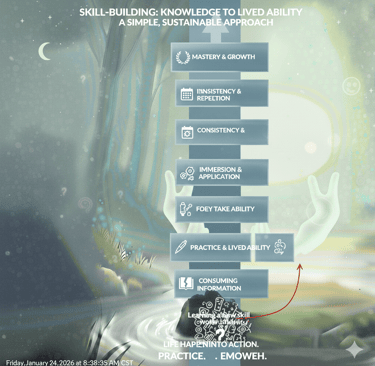
Learning a new skill is not about consuming more information. It is about consistency, immersion, and turning knowledge into lived ability through practice. This post breaks down a simple, sustainable approach to skill-building that actually works over time.
Derek Innes
1/24/20262 min read
Introduction
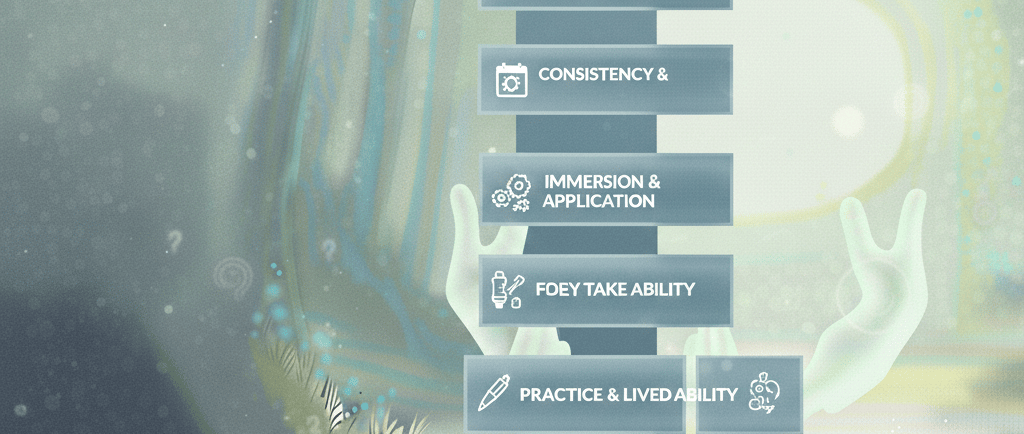
Learning a new skill often evokes images of endless hours spent consuming information. However, true mastery transcends mere accumulation of knowledge. It hinges on consistency, immersion, and the transformation of knowledge into practical ability. This blog post outlines a sustainable approach to skill-building that guarantees progress and fosters longevity in your learning journey.
The Importance of Consistency
Consistency is the backbone of effective skill acquisition. Instead of overwhelming yourself with information, devise a routine that allows for daily practice. By engaging in targeted exercises regularly, even if for short periods, you build strong neural pathways that facilitate easier recall and performance. For instance, if you are learning a musical instrument, practicing for 30 minutes a day is far more beneficial than a sporadic three-hour session once a week.
The Value of Immersion
Immersion plays a critical role in mastering a new skill. Surrounding yourself with the context of what you are learning accelerates the process. This could involve connecting with like-minded individuals, attending workshops, or consuming relevant media. Such activities enhance your understanding and provide real-world applications of the concept at hand. If you are keen on honing your language skills, immerse yourself in the culture related to that language, engage with native speakers, and consume media in that language. This depth of exposure enriches your learning experience.
Turning Knowledge into Action Through Practice
The transition from theoretical understanding to practical application is pivotal. Skill-building is not solely about consuming information; it is about applying what you learn. Create projects, take on challenges, or volunteer in areas where your new skill can be exercised. This not only solidifies your understanding but also builds confidence. For example, a budding photographer should start a personal photo project to experiment with techniques rather than keeping skills confined to theoretical learning.
Conclusion
In summary, mastering a new skill requires an approach rooted in consistency, immersion, and active practice. By integrating a sustainable learning strategy, you foster a deeper understanding and command over the skill you wish to develop. Prioritize your learning in such a way that it becomes a regular and enjoyable part of your life. Remember, the key to becoming proficient is not merely the amount of information you consume but how effectively you turn that knowledge into lived ability through practice.