
How We Talk to Ourselves Really Matters
The way we speak to ourselves quietly shapes our stress levels, confidence, motivation, and long term growth. This post explores how unconscious self talk can sabotage our efforts and how learning to work with our inner voice can become one of the most powerful tools for personal change.
Derek Innes
1/22/20263 min read

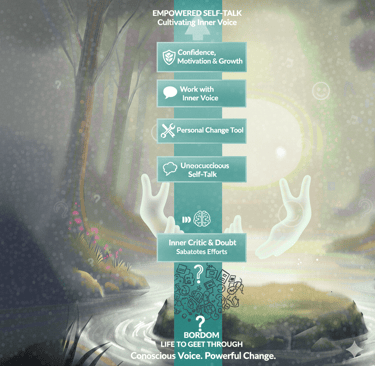
One of the most influential forces in our lives is something we rarely notice. It is not an external circumstance or another person. It is the way we talk to ourselves.
Because this inner dialogue happens constantly and quietly, it often fades into the background. We assume it is simply the way things are. Yet this unseen voice has enormous power over how we feel, what we attempt, and whether we persist or give up.
For many people, this inner voice is far more negative than they realize.
It escalates stress by framing situations as overwhelming or dangerous. Instead of calming us, it heightens anxiety and pushes us toward panic. It discourages us when progress feels slow, telling us that we are not capable or that our efforts are pointless. It criticizes us when we fall short, believing harshness will drive improvement, even though it usually leads to frustration and withdrawal.
This voice also fuels irritation and resentment by insisting that things should be easier or different, and it justifies avoidance by offering convincing reasons to delay difficult tasks. Over time, these patterns drain motivation, sabotage habits, and keep meaningful projects stalled.
The impact is cumulative. Left unchecked, this inner dialogue shapes our behavior and quietly limits what we believe is possible.
There are two essential steps to changing this pattern. The first is awareness. The second is learning to use the inner voice as an ally rather than an adversary.
Bringing Awareness to the Inner Voice
We cannot work with something we cannot see. Because the inner voice has been present for so long, most of us no longer notice it clearly.
A simple daily practice can bring it into focus.
Choose a task you have been avoiding. Commit to working on it for ten minutes. Set a timer and begin. As you do this, pay close attention to the thoughts that arise before you start, while you are working, and after you finish.
Notice any doubts, rationalizations, criticisms, or fears. Some people will notice resistance before even choosing a task. Others will hear discouraging thoughts as soon as they begin. Write these thoughts down. This process turns an unconscious habit into something observable.
Practicing this for two weeks can dramatically increase awareness. You may also begin noticing your inner dialogue in moments of avoidance, frustration, or self criticism throughout the day.
This awareness alone often softens the grip of the inner voice.
Learning to Use the Inner Voice for Good
Once awareness is established, a new relationship becomes possible. The inner voice does not need to be eliminated. It can be retrained.
When you notice harsh or discouraging self talk, pause and respond with intention.
Approach the voice with understanding. Recognize that it is often driven by fear and an attempt to protect you from failure or discomfort. Acknowledge that intention, then reassure yourself that you are capable and safe to proceed.
Invite encouragement. Replace discouraging statements with words that support effort and persistence. Let the voice remind you that progress is possible and that you can handle the challenge in front of you.
Cultivate kindness. In moments of disappointment, speak to yourself as a supportive friend would. Offer patience, compassion, and perspective rather than judgment.
Allow inspiration. Instead of forcing yourself through tasks, let the inner voice reconnect you with purpose. Remind yourself why the work matters and what it could make possible.
There is no single correct tone. The voice can also be curious, playful, grateful, or gentle. What matters is that it works with you rather than against you.
Learning to shape your inner dialogue is not about positive thinking or pretending everything is easy. It is about reclaiming influence over a force that already shapes your life.
When the inner voice becomes an ally, effort feels lighter, resilience increases, and forward movement becomes more natural. Over time, this shift quietly changes the direction of your life.