
How to Simplify Your Life with Systems
Life feels overwhelming when habits, tools, and methods collide without direction. This post explains what real systems are, why they reduce stress and complexity, and how to build systems that create clarity, efficiency, and predictability in your life.
Derek Innes
1/27/20263 min read
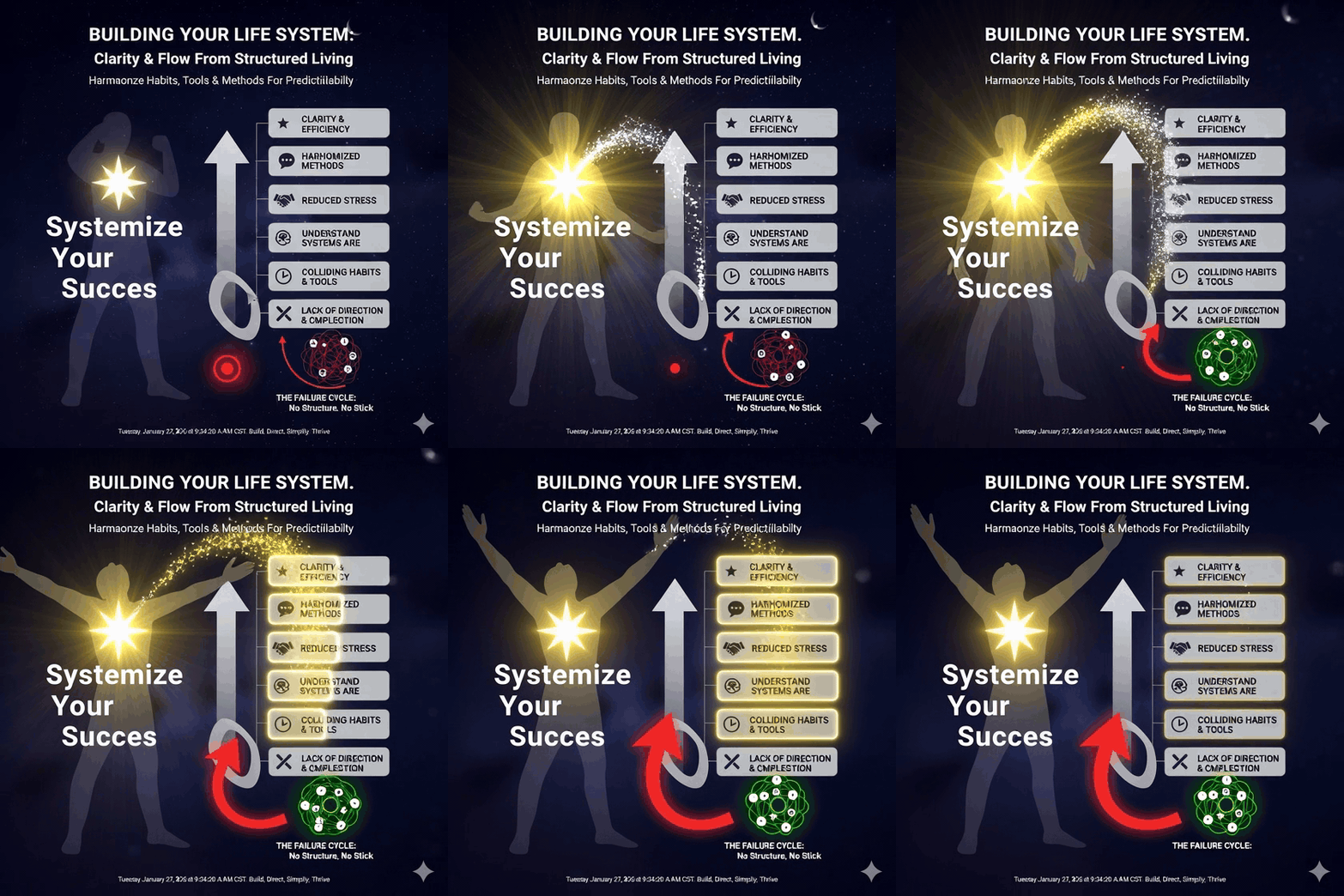
Life is vast, unpredictable, and often overwhelming. When everything feels complicated, it’s usually not because there’s too much to do—it’s because there’s no structure holding it all together.
Systems simplify life. They reduce chaos into something manageable by defining inputs, outputs, and repeatable processes. But a random collection of habits and tools is not a system. A system is intentional.
If you understand what makes a system effective, you can use systems to reclaim time, energy, and clarity.
A System Serves a Clear Purpose
A system does not exist for its own sake. It exists to accomplish a specific outcome.
Most people accumulate habits, tools, and productivity advice over time without checking whether they work together. When these components conflict, stress increases and progress stalls.
For example, exercising at night, prioritizing family time before bed, and aiming for early mornings are all good ideas individually. Combined without a clear purpose, they compete for the same limited time. The result is frustration and a constant feeling of failure.
A well-designed system starts with a single purpose. That purpose becomes the standard for deciding what belongs in the system and what does not. When every component supports the same goal, internal conflict disappears.
A System Is Designed for Efficiency
Once a system has a clear purpose, every step can be optimized.
Efficiency doesn’t mean rushing—it means removing unnecessary friction. Many processes include redundant steps, outdated habits, or unnecessary back-and-forth simply because they’ve never been questioned.
To build an efficient system:
Define the goal.
List every step involved.
Question each step.
Remove or streamline anything unnecessary.
Efficiency conserves energy, time, and attention. A good system does more with less and makes progress feel easier rather than forced.
A System Contains Everything It Needs
A system that requires you to stop midway and hunt for tools, information, or resources is incomplete.
Incomplete systems cause frustration, procrastination, and avoidance. When tasks feel hard to restart, they get delayed—and delayed tasks become heavier over time.
A complete system includes:
All required tools
All necessary information
Clear access to people or resources
A place for everything
When building a system, mentally walk through the process from start to finish. Identify what you’ll need at each step and either include it directly or create the simplest possible way to access it. Plan ahead for restocking or maintenance so the system stays usable.
A System Is Repeatable and Teachable
Repeatability is what separates systems from one-time efforts.
If you do something the same way each time, you can document it. If you can document it, you can teach it. If you can teach it, you can delegate or automate it.
A teachable system includes:
A clear beginning and end
Defined steps
Standards for quality and completion
Guidelines for time and resources
Even if you never delegate the task, clarity alone reduces mental load and speeds execution.
A System Creates Predictability
Systems provide predictability in two important ways.
First, they allow you to estimate effort. You can predict how long something will take, what resources it requires, and how often it must be done. This makes planning realistic instead of aspirational.
Second, systems generate data. When actions repeat, patterns emerge. You can track progress, identify bottlenecks, and make informed adjustments. Data turns intuition into insight.
Predictability creates confidence—and confidence reduces stress.
Systems Must Be Reviewed and Updated
No system lasts forever.
Goals change. Life circumstances shift. What once worked well can become outdated or restrictive.
Systems exist to serve you, not the other way around. When a system no longer supports its purpose efficiently, it needs to be adjusted—or discarded.
It’s also valid to change a system simply because you no longer enjoy using it. Sustainability matters. If a system creates resistance, it won’t last.
Be cautious of endless system-tweaking as a form of procrastination. Set scheduled review times and prioritize execution first. Systems should support action, not replace it.
Systems Create Freedom
Well-designed systems reduce mental clutter, eliminate friction, and create space for what matters most. They turn complexity into clarity and effort into momentum.
The question is not whether you use systems—you already do. The real question is whether your systems are intentional, aligned, and serving the life you want to live.
What systems in your life work reliably?
Where could better systems create more ease, clarity, and freedom?