
How to Develop More Patience
Impatience isn’t a personality flaw. It’s a resistance to the discomfort of growth. This post breaks down why impatience shows up, how it affects our relationships and work, and how to develop patience by learning to tolerate — and even appreciate — the messy process of learning and becoming.
Derek Innes
1/23/20262 min read

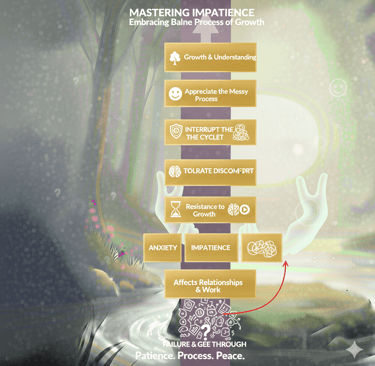
People often ask how to become more patient.
They notice themselves getting frustrated quickly. Annoyed when things move slowly. Angry when progress doesn’t match expectations. And over time, this impatience starts to affect their relationships, their work, and how they feel about themselves.
I understand this well. Impatience has been a lifelong companion for me.
It shows up when I want progress to happen fast — in a project, a habit, or learning something new — and it doesn’t. It shows up when I’m teaching someone and they don’t understand right away, triggering frustration and self-doubt. It shows up when other people aren’t moving at the speed I think they should.
If any of this sounds familiar, you’re not alone.
But here’s the important part: patience isn’t something you either have or don’t have. It’s a skill. And like any skill, it takes practice.
Why We’re Impatient
Impatience usually comes from one place: wanting results now.
We want progress without delay. Mastery without practice. Completion without the uncomfortable middle. We want to skip the phase where things are awkward, slow, and imperfect.
We don’t like being beginners. We don’t like making mistakes. We don’t like not knowing what we’re doing yet.
It’s like wanting the finished house without living through the construction phase. We want the clean, polished outcome without the noise, dust, and mess required to get there.
And when we resist that growth phase, impatience shows up.
This doesn’t just apply to ourselves. We often expect other people to move faster too — to understand quicker, perform better, and do things the way we prefer. Just as we lack grace for our own learning process, we lack grace for theirs.
A Shift in Mindset
Developing patience starts with a mindset shift.
Patience isn’t about forcing yourself to calm down or suppress frustration. It’s about developing grace — for yourself and for others — while you’re all in the middle of becoming something.
That requires learning to tolerate discomfort.
Growth is uncomfortable. Learning is messy. Being a beginner feels inefficient and vulnerable. Slowness can feel like failure when you’re focused on outcomes.
But impatience is often just resistance to this discomfort.
So the question becomes: can you change your relationship with the growth process itself?
Instead of fighting it, can you learn to see its value?
Can you find beauty in mistakes, knowing that this is where learning actually happens?
Can you find beauty in being a beginner, where possibility is widest?
Can you find beauty in messiness, where creativity lives?
Can you find beauty in slowness, where curiosity and depth can grow?
When you stop trying to escape the growth phase, impatience loses its grip.
How to Practice
Start by making a simple commitment: to notice impatience when it arises.
Pay attention to moments when you want things to move faster. When you want results immediately. When you feel irritated that someone — including yourself — isn’t “getting it” yet.
When you notice impatience, pause.
Take a breath. Let the moment slow down slightly.
Instead of trying to eliminate the discomfort, see if you can stay with it. Ask yourself what kind of growth is happening here. Look for what’s being learned. Look for the beauty in the mess, the mistake, the delay.
Then extend that same grace outward.
The person in front of you is in their own growth process. Just like you. What might be unfolding for them? What patience might allow to emerge?
Patience isn’t passive. It’s an active willingness to stay present while growth happens — without rushing past it.
And the more you practice that willingness, the more patient you naturally become.