
How Small Daily Acts Build Unshakeable Self-Trust
Courage isn’t only for dramatic moments—it’s built through small, consistent daily actions. This post shows practical ways to strengthen self-trust and face life’s challenges with quiet confidence.
Derek Innes
1/19/20262 min read

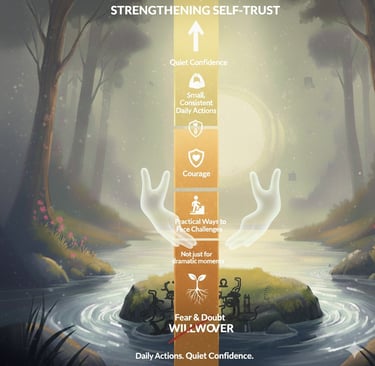
We often think of courage as something we summon only in dramatic moments—facing danger, making big decisions, or enduring hardship. But the truth is, courage is most often found in the small, quiet acts we take every day.
Day after day, we erode trust in ourselves by avoiding tasks, resisting uncomfortable emotions, or giving in to distraction. Every time we choose comfort over action, we signal to ourselves that we cannot be relied upon.
But what if we could cultivate unshakeable self-trust, one small step at a time? What if the courage to face life’s challenges could grow from simple, daily practices rather than grand heroic acts?
It can.
Why Small Daily Acts Matter
Self-trust is like a muscle: it strengthens when exercised consistently. When we show up for ourselves—even in tiny ways—we reinforce the belief that we can handle discomfort, make good choices, and keep our word. Over time, this quiet courage becomes unshakeable.
Daily Practices to Build Quiet Courage
Here are actionable ways to cultivate courage and strengthen your trust in yourself:
1. Keep Small Promises to Yourself
Make commitments to yourself intentionally. Don’t say, “I’ll try to do this,” say, “I promise I will do this today.” Start with small, achievable promises—making your bed, meditating for five minutes, or writing a single paragraph. The key is consistency: show yourself you can follow through, even in tiny ways.
2. Face Difficult Tasks in Small Doses
If a task feels overwhelming, break it into the smallest possible step. You have enough courage to face it for just one minute. Start there. Breathe, take it on, and notice the power in showing up. Often, starting is the hardest part—and starting builds courage.
3. Delay Automatic Actions
We all have habits that aren’t harmful but aren’t aligned with our best intentions: scrolling endlessly on social media, bingeing videos, or snacking impulsively. Instead of reacting automatically, give yourself a pause. Even a few minutes of delay can shift your relationship with the habit. You’ll gain control and recognize your ability to make conscious choices.
4. Speak Your Truth
Sharing your thoughts or feelings can feel uncomfortable—but withholding them erodes self-trust. Start small: voice something slightly uncomfortable, even if it’s just expressing a preference or opinion. Over time, this practice strengthens your ability to communicate authentically, even in high-stakes situations.
5. Sit With Uncomfortable Emotions
We often avoid emotions like sadness, anxiety, or frustration. But true courage includes allowing yourself to feel these emotions, even briefly. Start by sitting with discomfort for 10–20 seconds. Breathe, observe, and reassure yourself: “It’s okay. I can handle this.” Each time you do, your self-trust grows.
Building Trust, One Step at a Time
You don’t need to do all of these practices every day. Start with one, focus on it for a week, then add another. Small, consistent actions are what build self-trust—not perfection or intensity.
Quiet courage is developed gradually, but it’s remarkably powerful. Each time you show up for yourself, you reinforce the message: I am capable. I am trustworthy. I can face what comes.
Over time, these small acts compound, creating a foundation of confidence that allows you to handle bigger challenges with poise and resilience.
Courage doesn’t always roar. Sometimes, it whispers—and the quietest, most consistent acts of courage often make the biggest difference.