
From Intention to Completion: The Core Practices for Meaningful Work
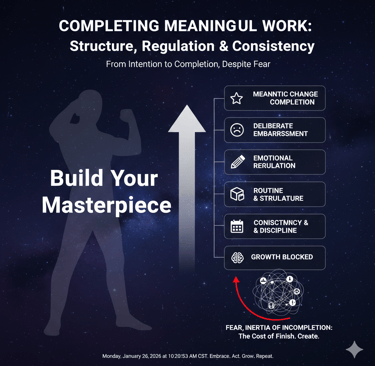
Completing meaningful work is less about talent and more about structure emotional regulation and consistency. This post breaks down the core practices that allow big important projects to move from intention to completion even when fear doubt and overwhelm show up.
Derek Innes
1/26/20261 min read
Understanding the Journey from Intention to Completion
Many of us have experienced the frustration of starting a big project only to see it crumble under the weight of fear, doubt, and overwhelm. Completing meaningful work is less about innate talent and more about establishing a strong structure, regulating emotions, and maintaining consistency throughout the journey. In this post, we will explore key practices that can help transform intentions into successful outcomes, particularly in challenging projects.
Embracing Structure to Foster Success
To navigate through complex projects, implementing a structured plan is vital. This involves breaking down tasks into manageable pieces, allowing for a clear roadmap to follow. A well-defined structure supports better organization and eliminates the feeling of being overwhelmed. By outlining specific steps and setting realistic deadlines, individuals can sustain focus and motivation, ultimately moving closer to completing their intended work.
Emotional Regulation: The Key to Overcoming Obstacles
Emotional regulation is crucial in maintaining productivity, especially when fear and doubt arise. Recognizing and addressing emotions can prevent them from derailing our progress. Techniques such as mindfulness, journaling, or seeking support from mentors can help individuals gain perspective during challenging times. By constructing a healthy emotional environment, we can navigate the ups and downs of meaningful work with greater resilience.
The Power of Consistency in Achieving Goals
Consistency is one of the most significant indicators of long-term success. Establishing a routine that incorporates time for focused work can dramatically enhance progress. Allocating specific times for work and sticking to them helps in forming habits that sustain motivation. By committing to consistent action, individuals gradually build momentum that propels them toward completion of their projects, even in the face of adversity.
In conclusion, completing meaningful work is a journey that requires more than just talent; it necessitates a blend of structure, emotional regulation, and consistency. By embracing these core practices, individuals can navigate the complexities of their projects, ensuring they move from mere intention to tangible completion, despite the inevitable challenges that arise along the way. Remember, it's in overcoming these obstacles that we often find our greatest achievements.