
Exploring the Convergence of Stoicism and Zen Buddhism: Five Practices for a Resilient Life
Stoicism and Zen Buddhism share practical wisdom for meeting life with clarity, resilience, and compassion. This article explores five overlapping practices that help reduce unnecessary suffering, strengthen perspective, and anchor you in what truly matters.
Derek Innes
1/27/20266 min read
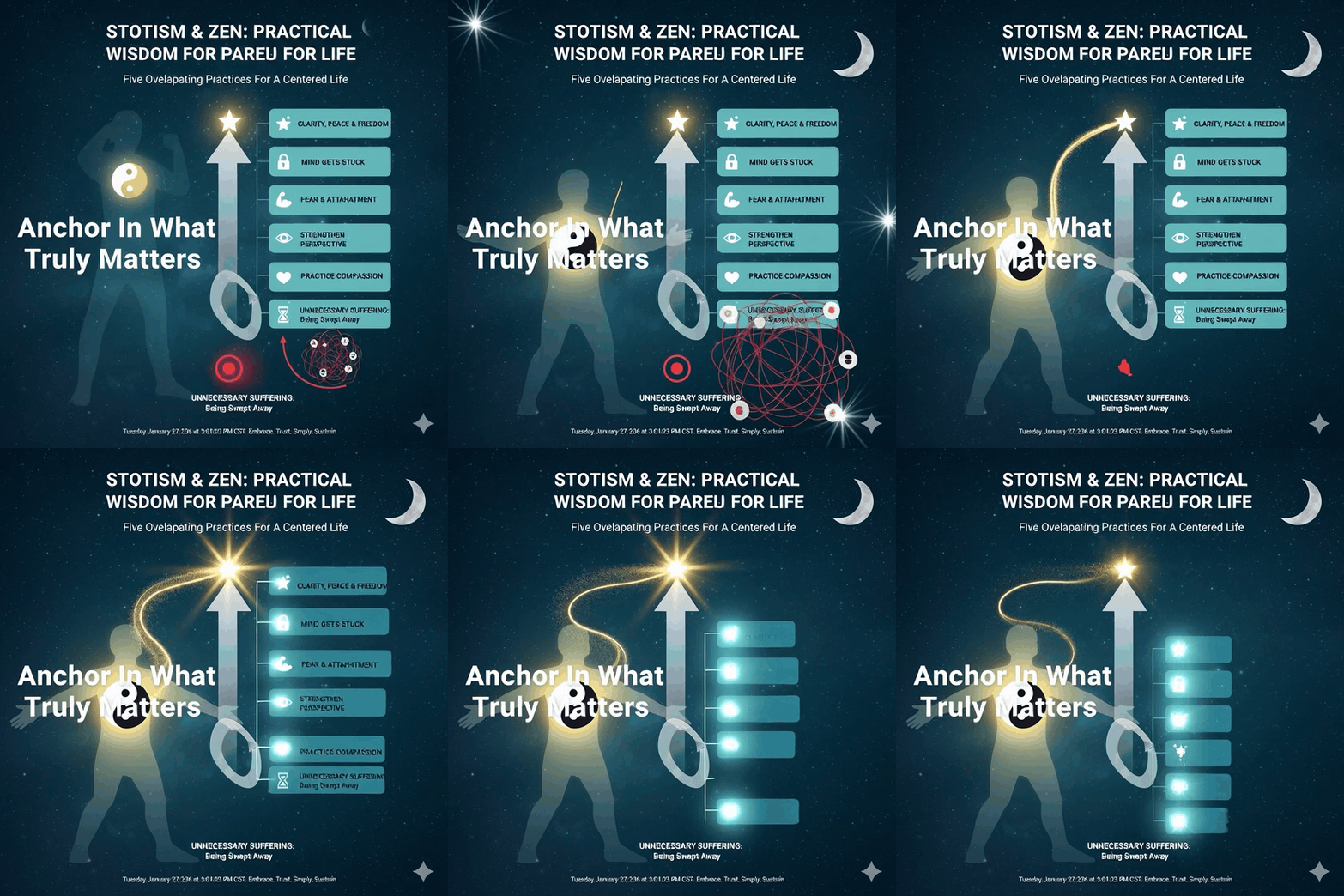
Introduction to Stoicism and Zen Buddhism
Stoicism and Zen Buddhism are two philosophical traditions that, although originating from different cultures and contexts, share fundamental principles that can enrich contemporary life. Stoicism, rooted in ancient Greece and popularized in Rome, emphasizes rationality and self-control as essential components in overcoming adversity. Key figures such as Seneca, Epictetus, and Marcus Aurelius shaped Stoic thought by advocating for resilience through the acceptance of fate and focusing on what is within one’s control. This philosophy asserts that by cultivating mental clarity, individuals can confront challenges with equanimity and purpose.
Conversely, Zen Buddhism, which emerged from Mahayana Buddhism in China and later spread to Japan, emphasizes direct experience and the nature of reality through meditation. Influential figures in Zen, such as Dogen and Hakuin, highlighted the significance of mindfulness and the practice of zazen (seated meditation) as a means to attain enlightenment. Compassion and awareness are central to Zen teachings, prompting practitioners to cultivate kindness towards themselves and others as a pathway to inner peace.
Both traditions underscore the importance of mental clarity as a tool for navigating emotional turmoil, highlighting techniques to develop emotional resilience and compassionate living. Stoicism teaches practitioners to examine their thoughts and reactions, fostering a disciplined mind, whereas Zen Buddhism encourages a tranquil state of presence through mindfulness and acceptance. The integration of these philosophies offers a robust framework for achieving a resilient life in today’s fast-paced world. The convergence of Stoicism and Zen Buddhism provides valuable insights into how to cultivate a balanced mindset, adapt to life's uncertainties, and engage meaningfully with the world around us.
Mindfulness and Awareness
At the intersection of Stoicism and Zen Buddhism lies the profound practice of mindfulness, a fundamental principle that both traditions espouse to cultivate mental clarity and emotional resilience. Mindfulness involves the intentional focus on the present moment, allowing individuals to observe their thoughts and feelings without judgment. This practice not only enhances awareness but also enables a more authentic engagement with life’s myriad challenges.
In Stoicism, mindfulness is closely associated with the concept of autarkeia, or self-sufficiency, where the Stoic cultivates an inner sense of peace through rational observation. Stoic philosophers such as Epictetus emphasized the importance of recognizing which aspects of life are within one’s control and which are not. By practicing mindfulness, individuals become adept at differentiating between these realms, thereby fostering a mindset that remains grounded in reality.
Similarly, Zen Buddhism places a strong emphasis on direct experience and awareness through meditation. Zen practitioners engage in techniques such as zazen (sitting meditation) and mindful breathing to develop a clearer perception of their thoughts and feelings. These exercises encourage individuals to maintain a gentle yet vigilant awareness of their internal landscape, allowing them to respond rather than react to life's disturbances.
To integrate mindfulness into daily life, one could start with simple meditation practices that emphasize breath control and stillness. Practices such as the saboteur exercise—a method often taught in both traditions—invites individuals to acknowledge their thoughts without attachment, thus cultivating a serene space for reflection. As one engages in these methods, clarity begins to permeate decision-making processes, enhancing one’s ability to tackle emotional upheavals with equanimity.
Ultimately, by harmonizing the principles of mindfulness from Stoicism and Zen Buddhism, individuals can develop a profound sense of awareness that equips them to face life's uncertainties with resilience and poise.
Practice 2: Acceptance and Letting Go
Within the frameworks of Stoicism and Zen Buddhism, the principles of acceptance and letting go emerge as profound tools for cultivating resilience. Stoicism teaches us to accept the things we cannot change, recognizing that our emotional well-being hinges on how we respond to adverse situations. Similarly, Zen Buddhism advocates for non-attachment, emphasizing that clinging to outcomes or possessions leads to suffering.
One effective technique for practicing acceptance involves reframing negative thoughts. This cognitive restructuring allows individuals to view challenges from a different perspective, reducing their emotional weight. For instance, instead of perceiving failure as a catastrophe, one might see it as an opportunity for growth. This mindset shift fosters acceptance by emphasizing the transient nature of setbacks and achievements alike.
Cultivating equanimity is another essential aspect of acceptance, requiring individuals to maintain mental stability in the face of volatility. Mindfulness practices, such as meditation, can enhance one’s ability to remain centered amidst external turmoil. By observing thoughts and feelings without attachment, practitioners can develop a deeper understanding of impermanence, leading to greater ease in letting go of expectations.
Furthermore, incorporating daily reflection on what is beyond our control can solidify the practice of non-attachment. Keeping a journal to articulate frustrations or desires while identifying aspects that one cannot influence can be particularly beneficial. This exercise not only fosters clarity but also aids in acknowledging personal boundaries concerning control.
Ultimately, embracing acceptance means recognizing that suffering often stems from our resistance to life’s inherent changes. By applying both the Stoic acceptance of fate and the Zen principle of non-attachment, individuals can learn to let go of unnecessary suffering, allowing them to engage fully with life’s transient beauty.
Practice 3: Compassion and Kindness
Compassion is a fundamental aspect of both Stoicism and Zen Buddhism, serving as a cornerstone for personal and communal well-being. In Stoicism, the cultivation of compassion helps individuals transcend their inner turmoil by redirecting focus from self to others. This shift allows for a more profound understanding of shared human experiences, reducing personal suffering and fostering a serene state of mind. Similarly, Zen Buddhism emphasizes compassion as a means to alleviate suffering for all beings, highlighting the interconnectedness of life. By fostering compassion, individuals can experience deeper levels of empathy, which enrich their relationships and enhance societal harmony.
To cultivate compassion in daily life, one can integrate simple yet effective exercises. Practicing self-compassion is a vital first step; this can involve acknowledging one's own struggles and treating oneself with the same kindness one would offer to a friend. This practice not only promotes mental well-being but also prepares individuals to extend that same understanding and kindness to others.
Another practical exercise is engaging in random acts of kindness. This could be as simple as helping a neighbor, volunteering time at a local shelter, or offering words of encouragement to someone in need. These acts do not require grand gestures; even small actions can create ripples of positivity. Moreover, expressing gratitude has been recognized in both philosophical traditions as a powerful tool for enhancing one's perspective on life. By regularly reflecting on what we are grateful for, we can shift our focus away from negative thoughts and stimulate feelings of kindness toward ourselves and others.
The regular practice of compassion and kindness ultimately nurtures emotional resilience, as individuals become better equipped to face life’s challenges while contributing positively to their communities. Embracing these practices fosters a sense of belonging and interconnectedness, essential for a fulfilling and resilient life.
Conclusion: Integrating Stoicism and Zen Practices
In examining the teachings of Stoicism and Zen Buddhism, it becomes clear that both philosophies provide valuable insights into developing resilience and achieving a more balanced and fulfilling life. Stoicism emphasizes the importance of accepting what cannot be changed, cultivating inner strength in the face of adversity, and focusing on our responses rather than external events. Similarly, Zen Buddhism encourages mindfulness, present-moment awareness, and a compassionate approach to oneself and others. Together, these practices can create a powerful toolkit for navigating life’s uncertainties.
One of the core lessons derived from both Stoicism and Zen is the importance of clarity in thought and action. By cultivating a state of mindful awareness, individuals are better equipped to discern what truly matters amidst the chaos of daily life. This clarity not only enhances decision-making but also fosters a sense of peace, allowing one to remain grounded regardless of external turmoil. Furthermore, the practice of offering compassion to oneself and others nurtures emotional resilience, promoting a supportive learning environment when faced with setbacks.
As readers consider integrating these practices into their daily routines, they may find that adopting a Stoic mindset alongside Zen principles evokes a more profound sense of purpose. Setting aside moments for reflection, engaging in mindfulness meditation, and applying the Stoic practice of journaling can reinforce this journey of self-improvement. By diminishing the weight of expectations and fostering a sincere connection with their emotions, individuals can better adapt to life’s challenges and embrace the transient nature of existence.
Ultimately, the convergence of Stoicism and Zen Buddhism offers a holistic framework for facing life’s complexities with equanimity. By internalizing these timeless teachings, individuals cultivate resilience that honors both their unique experiences and those shared within the broader human community.