
Embracing Discomfort: The Key to Personal Growth
Comfort keeps us safe, but too much of it quietly limits our lives. This post explores why small, intentional doses of discomfort are essential for growth, how comfort can become addictive, and how to work with discomfort in a sustainable way that builds strength rather than burnout.
Derek Innes
1/26/20264 min read
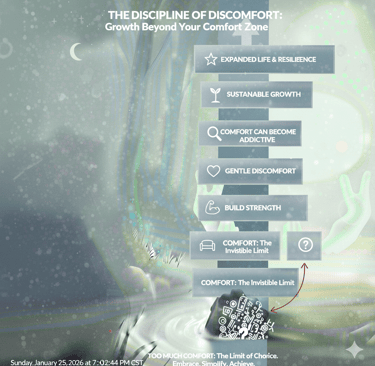
Humans are naturally inclined to seek comfort, a behavior deeply rooted in our psychology and biology. The pursuit of comfort can be understood as an instinctive response cultivated over millennia, where safety and survival were paramount. In prehistoric times, comfort provided a sanctuary from dangers, fostering an environment conducive to rest, rejuvenation, and bonding. As such, this compulsion to avoid discomfort remains embedded in our modern psyche, manifesting itself in various ways across different contexts.
Comfort serves as a safety net, a mental space where risks are minimized and stressors are buffered. This drive is closely linked to our biological responses; the brain is wired to prioritize a sense of security, often triggering avoidance mechanisms when faced with potential discomfort. When we encounter challenges or unfamiliar situations, our instinct may prompt us to retreat into comfortable routines or environments, thereby evading the anxiety associated with the unknown. This behavior illustrates how our brains are designed to protect us from harm, yet it can inadvertently hinder our growth.
The allure of comfort is further amplified by the short-term benefits it provides. Engaging in familiar activities, such as lounging at home or indulging in familiar food, can yield immediate gratification and stress relief. However, these temporary pleasures can mask the long-term consequences of stagnation. Excessive comfort can lead to a fear of change, making it increasingly difficult to pursue new opportunities or embrace challenges that could foster personal development.
Ultimately, while the desire for comfort is a natural human inclination, recognizing its potential to trap us is essential. Understanding the comfort trap allows for deeper contemplation of how we respond to discomfort and the importance of stepping outside of our safe confines for personal growth.
The Growth Mindset: Why Discomfort is Essential
Embracing discomfort plays a pivotal role in fostering a growth mindset, which is fundamentally about viewing challenges as opportunities for personal growth. When individuals confront difficult situations or challenges, they are often pushed beyond their comfort zones, leading to enhanced resilience and expanded capabilities. This subtle transition in perspective allows individuals to seek out discomfort, understanding that it can spur progress and transformation.
Eminent psychologist Carol Dweck’s research highlights the dichotomy between a fixed mindset and a growth mindset. Those with a growth mindset tend to view discomfort as an essential part of the learning process. For instance, consider the story of Thomas Edison, who encountered numerous failures before successfully inventing the light bulb. Each setback was a degree of discomfort that ultimately resulted in groundbreaking innovation. His experience exemplifies that enduring struggle fosters not only perseverance but also fuels subsequent achievements.
Another noteworthy example is J.K. Rowling, author of the Harry Potter series. Faced with rejections from multiple publishers and personal hardships, Rowling embraced discomfort as a catalyst for her determination. Her ability to withstand adversity allowed her to refine her craft, leading to monumental success. These examples illustrate that individuals who actively engage with discomfort often emerge with greater strength and a more robust set of skills.
Incorporating discomfort into one’s life can also reframe the perception of challenges. Many may initially see discomfort as a barrier; however, those who cultivate a growth mindset recognize it as an essential stepping stone towards success. By embracing difficult experiences, individuals can develop critical attributes such as grit, resilience, and adaptability, which are indispensable in today's ever-changing environment.
Breaking the Comfort Addiction: Strategies for Embracing Discomfort
To foster personal growth, it is essential to challenge the comfort addiction that many individuals face. Breaking free from this cycle involves gradually introducing discomfort into one’s daily routine through intentional strategies.
One effective approach is to set challenging physical goals. This might include training for a marathon, committing to a new fitness regimen, or engaging in a sport that pushes one's boundaries. As individuals strive to meet these goals, they often confront physical limits and mental barriers, which can facilitate personal development and resilience.
Additionally, engaging in difficult conversations is a powerful strategy for embracing discomfort. Many individuals avoid discussions regarding sensitive topics such as finances, career aspirations, or relationships due to fear of conflict or vulnerability. However, initiating these conversations can lead to clarity and deeper connections, allowing individuals to navigate their relationships more effectively.
Pursuing new learning experiences is another valuable method. This can involve enrolling in a course outside one’s area of expertise, seeking new hobbies, or even traveling to unfamiliar places. Exposure to novel situations not only enhances one’s skill set but also fosters adaptability and problem-solving abilities.
Moreover, individuals should consider implementing small changes in their daily routines. This could range from taking a different route to work, trying new cuisine, or attending events that ignite curiosity. These incremental shifts, while seemingly minor, can accumulate and result in significant personal growth.
Ultimately, the key to successfully embracing discomfort lies in maintaining a sustainable approach. By integrating these strategies into daily life, individuals can gradually learn to operate outside their comfort zones, unlocking their true potential and promoting consistent personal growth.
Building Strength Through Discomfort: A Sustainable Approach
Embracing discomfort is a powerful catalyst for personal growth, yet it is crucial to approach such a mindset with a sustainable strategy. The journey towards significant self-improvement does not necessitate overwhelming oneself with excessive challenges; instead, integrating discomfort in a balanced manner can foster resilience and promote long-term development. One of the primary methods to achieve this balance is through recognizing and respecting individual limits, allowing for a tailored approach to discomfort that spurs growth while avoiding burnout.
To cultivate sustainable habits, individuals should first familiarize themselves with their own boundaries. This self-awareness encourages one to take on challenges that are just outside their comfort zone rather than plunging into overwhelming experiences. For instance, when navigating physical discomfort, it may be more effective to gradually increase the intensity of workouts rather than engaging in extreme exercises that could lead to injury or exhaustion. Similarly, emotional discomfort can be approached by initiating conversations that encourage vulnerability while being cognizant of one's emotional capacities.
Additionally, integrating restorative practices is essential for maintaining mental and physical well-being. Incorporating strategies like mindfulness meditation, regular physical activity, or simply allowing time for relaxation can create an environment that supports growth. These practices not only provide the necessary recovery from any discomfort endured but also build resilience, making it easier to face future challenges with confidence.
Lastly, fostering a supportive environment can significantly amplify one's capacity to embrace discomfort effectively. Seeking out mentors, joining supportive communities, or engaging with peers who similarly value growth can provide encouragement and constructive feedback. This shared journey of discomfort, framed within a community, enhances the overall experience and promotes a sense of belonging while navigating the challenges of personal development.