
Embracing a Slow Life: A Gentle Approach to Productivity
Productivity doesn’t have to mean rushing, grinding, or ignoring your humanity. A slower, more intentional pace can lead to better focus, deeper creativity, and a more satisfying life.
Derek Innes
1/21/20262 min read
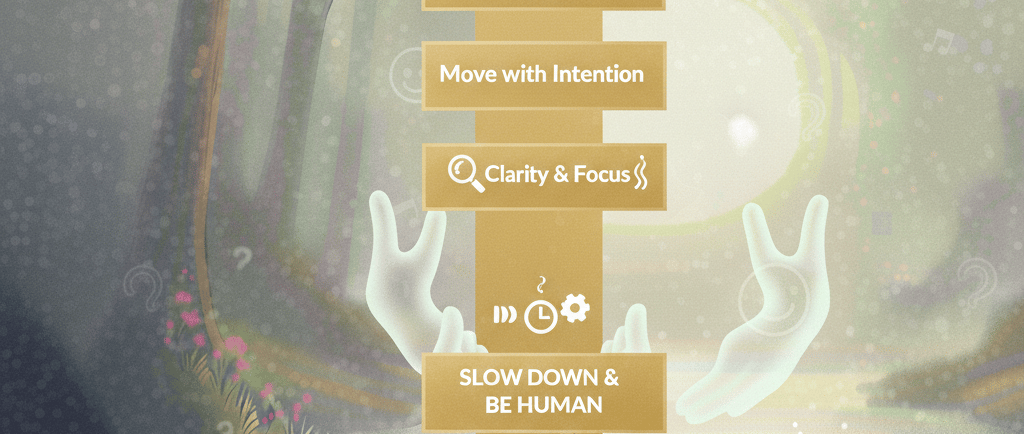
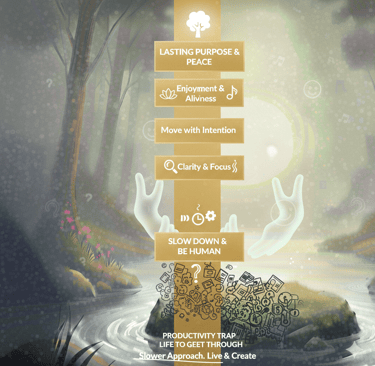
Many people set out with a simple goal: be more productive.
They push harder, stack their task lists, clear their inboxes, and measure success by how much they can get done in a day. On the surface, it looks effective. Underneath, something important often gets lost.
Our humanity.
When productivity becomes the primary aim, we start treating ourselves like machines. Efficiency replaces presence. Speed replaces care. Life turns into something to get through rather than something to live.
But swinging to the opposite extreme doesn’t solve the problem either. Completely abandoning action in favor of comfort can slowly drain a sense of purpose, aliveness, and creative energy. Avoidance creeps in. Life gets smaller.
The real question isn’t whether to act or not. It’s how to take action without abandoning what makes life meaningful.
A slower approach offers that balance.
Slowing down doesn’t mean doing less for the sake of it. It means moving with intention instead of reflex. It means choosing presence over constant urgency.
A slow approach begins with intention. At the start of the day, or before a task, pause and take a breath. Ask yourself what would make this day, or this moment, a good use of your time and energy. That single pause shifts you from reaction to choice.
Slowing down also helps clarify what actually matters. When everything feels urgent, nothing truly is. Space allows you to see which actions will create the greatest impact and which are simply noise.
With clarity comes focus. When you place one important task in front of you and give it room, focus stops feeling like strain and starts to feel like a gift. You’re no longer splitting attention across ten things. You’re inhabiting one thing fully.
Depth becomes possible in that space. Instead of rushing through an activity just to finish it, you can experience it. You notice your breathing. You feel your creativity emerge. The work becomes something you’re inside of, not something you’re pushing against.
Slowness also changes the moments between tasks. Rather than rushing from one thing to the next, you allow brief pauses. You reflect on what you just completed. You reset your intention before moving on. These small transitions reduce mental clutter and exhaustion.
And perhaps most importantly, slowing down leaves room for enjoyment. Not every action needs to be optimized. Some days are successful because they feel good, not because they’re packed with output. Enjoyment isn’t a distraction from a good life. It’s part of it.
This shift doesn’t require a dramatic overhaul.
Start small. Take a breath before a task. Set an intention a few times a day. Let these moments of awareness accumulate.
Use your breath as a guide. When you notice tension or rushing, pause and check in. Do you need to slow down? Do you need more space?
Create that space where you can. Reduce unnecessary meetings. Remove tasks that don’t truly matter. Be less ambitious with daily expectations. Protect time for focused, meaningful work.
As you do, experiment with enjoyment and creativity. Ask how you might approach your work with more curiosity and care. This is a practice, not a switch.
A slower life isn’t about doing nothing. It’s about doing what matters, at a pace that allows you to stay human.
What would it look like for you to live and work just a little more slowly?