
Create More Intentional Time
When everything is optional, distraction wins. This post explains how using simple, intention-based time blocks can reduce mental noise and help you act with clarity instead of drifting through the day.
Derek Innes
1/19/20261 min read

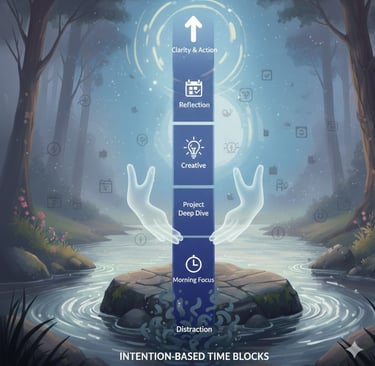
Most days, the problem isn’t that we’re too busy.
It’s that we’re too unstructured.
Outside of meetings or fixed commitments, much of the day is open. That freedom sounds good—until it turns into scattered attention, constant switching, or passive distraction.
When there’s no clear intention, the default takes over.
The Cost of Unstructured Time
Open time invites:
Jumping between tasks
Overthinking what to do next
Reaching for easy distractions
Ending the day busy but unsatisfied
The issue isn’t laziness.
It’s the absence of a clear container for attention.
Intentional time solves that.
What Intentional Time Means
Intentional time is simple:
one block of time, one purpose.
Not vague productivity.
Not multitasking.
Not “see what happens.”
Just a clear intention for a defined period.
Examples:
Writing time
Training time
Reflection time
Admin time
When the time has a name, your attention knows where to go.
You Don’t Need to Schedule Your Entire Day
This isn’t about rigidity or over-planning.
You don’t need every minute accounted for.
Even two or three intentional blocks per day can dramatically change how focused and calm you feel.
Structure creates freedom—when it’s used lightly.
Practical Examples of Intentional Time
Here are ways people commonly use it:
A 30-minute focus session on one important task
A weekly block for finances or planning
A short daily declutter or reset
Defined email-processing windows
An end-of-day tidy-up
An evening reflection or review
Each one removes decision fatigue by answering one question in advance:
“What is this time for?”
Why This Works
Intentional time:
Reduces mental noise
Prevents aimless drifting
Makes starting easier
Improves follow-through
You don’t need more discipline.
You need fewer decisions.
A Simple Question to End With
What kind of intentional time would make your day feel more deliberate—and less reactive?
Start small.
Name the time.
Protect the intention.
Clarity follows.